
Understanding Eye-Care Professionals: A Guide for Patients and Families
Caring for our eyes involves a wide range of trained professionals, each playing a unique role in supporting vision health. For individuals navigating complex conditions such as ocular melanoma, understanding who does what can help make the care journey clearer, more informed, and more empowering.
Below is a helpful guide to the many professionals who contribute to eye health, early detection, treatment, and long-term support.
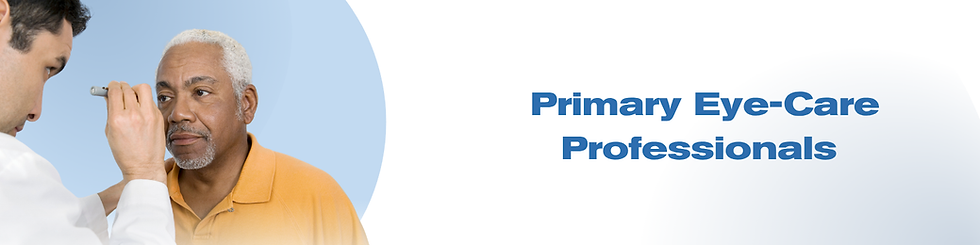
Optometrist A health professional who provides primary vision care, sight testing and management of vision changes. An optometrist can perform dilated eye exams, vision tests and detect certain eye abnormalities. An optometrist does not perform surgery.
Ophthalmologist A medical doctor who specializes in eye and vision care. An ophthalmologist diagnoses and treats eye diseases and is licensed to practice medicine and surgery. Many ophthalmologists are also involved in scientific research in eye diseases and disorders.
Ocular Oncologist An eye cancer physician who provides comprehensive care for patients with eye tumors. Ocular oncologists are trained in ophthalmology and have completed specialized training in eye cancers. They diagnose, treat and research malignancies involving the eye, eyelid and surrounding tissue.
Ocularist An ocularist is a trained specialist who designs, hand paints, fits, and maintains custom prosthetic eyes for people who have lost an eye or were born without one, blending medical knowledge with artistic skill to create a natural looking, comfortable artificial eye and provide ongoing care. They work alongside physicians — especially ophthalmologists and oculoplastic surgeons — who handle the medical and surgical aspects of eye care.
Optician An optician is a trained eye care professional who interprets prescriptions from optometrists or ophthalmologists and then fits, adjusts, and dispenses eyeglasses, contact lenses, and other vision correction devices.

Orthoptist
A healthcare professional who specializes in diagnosing and treating eye movement and coordination problems, such as double vision, lazy eye (amblyopia), and crossed eyes (strabismus). Orthoptists often work closely with ophthalmologists.
Oculoplastic Surgeon
An ophthalmologist with advanced training in eyelid, orbit, and tear-duct surgery. They perform procedures such as eyelid reconstruction, ptosis repair, and orbital surgery, including the surgical care often required before a prosthetic eye is fitted.
Retina Specialist
An ophthalmologist who focuses on diseases of the retina and vitreous, treating conditions such as macular degeneration, diabetic retinopathy, retinal tears, and retinal detachment.
Cornea Specialist
An ophthalmologist trained in corneal diseases and surgeries, including corneal transplants, keratoconus management, and complex anterior-segment procedures.
Neuro-Ophthalmologist
A specialist who treats vision problems related to the brain and nervous system, including optic nerve disorders, visual field loss, and unexplained changes in vision.
Low-Vision Specialist
Often an optometrist with additional training who helps people with permanent vision loss maximize their remaining sight using adaptive devices, magnifiers, and rehabilitation strategies.
Vision Therapist
A professional (often working under an optometrist) who provides structured therapy to improve visual skills such as tracking, focusing, and eye-team coordination.
Contact Lens Specialist
Typically an optometrist with advanced expertise in fitting complex or medically necessary contact lenses, including scleral lenses and specialty lenses for conditions like keratoconus.
Ophthalmic Technician / Ophthalmic Assistant
Clinical support staff trained to perform diagnostic tests, imaging, and patient preparation in ophthalmology clinics.
Ophthalmic Photographer / Imager
A specialist who captures detailed diagnostic images of the eye, such as OCT scans, fundus photos, and angiography images — essential tools in monitoring many eye conditions.
Why This Matters for the Ocular Melanoma Community
For individuals living with ocular melanoma, care often involves a coordinated team of professionals working together — from early detection and diagnosis to treatment, follow-up, and long-term support. Understanding the roles of each specialist can help patients and families feel more informed and confident as they navigate their care.
At Ocumel Canada, we remain committed to supporting Canadians affected by ocular melanoma through education, advocacy, and community connection. By helping patients understand the many professionals involved in eye health, we hope to empower individuals to ask questions, seek support, and feel more prepared throughout their journey.


